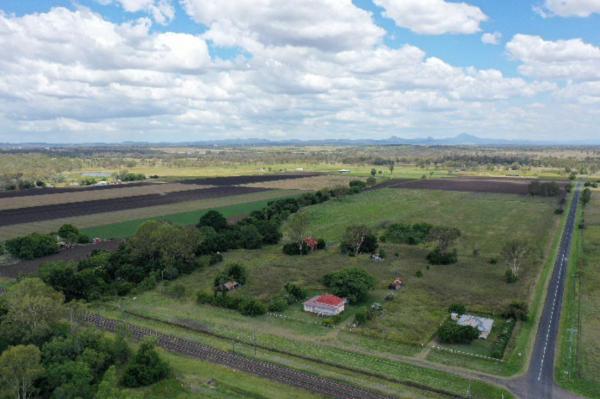
A 155-hectare residential project at Thagoona is under intense scrutiny after Ipswich City Council identified serious flood and environmental concerns.
The Thagoona South development, spanning multiple properties along McGearys, Kavanagh and Turnbull Roads, lies in an area prone to heavy water flows from upstream catchments.
Updated flood mapping indicates areas previously considered dry – including the proposed north-eastern residential corner – could become a “flood island” as stormwater diverts beneath the railway line.
Council has ordered Turnbull Road Holdings Pty Ltd to overhaul its stormwater management plans.
The developer has been asked to provide detailed flood maps showing water depth, velocity, hazards and potential impacts on neighbouring properties.
Without consent from affected landowners, council warned, the project could face delays or require significant redesign.
The development area contains substantial native vegetation, including wildlife corridors and critical ecological linkages.
Council says the developer’s ecological report is incomplete, citing limited on-ground seasonal surveys and inadequate assessment of mature trees and waterways.
Additional studies are required to ensure the project will not fragment sensitive habitats or destroy important vegetation.
The State Assessment and Referral Agency (SARA) also warned of shortcomings, stating the development application fails to meet native vegetation clearing guidelines and proper infrastructure planning standards.
Several on-site streams are slated for realignment or partial reconstruction.
Council insists designs must mimic natural watercourses, maintain riparian buffers, limit erosion, and support long-term ecological health.
Detention basins and culverts must manage both minor and major storm events without harming waterways. Referral to the Department of Agriculture and Fisheries may be needed to prevent fish passage barriers.
Council is also pushing for a comprehensive water quality plan for both construction and completed stages.
Proposed measures include wetlands and bio-retention basins to treat stormwater and prevent sediment runoff harming downstream ecosystems. Interim solutions must maintain waterway values during staged construction.
Council cautioned against splitting parks with roads or waterways, requiring pathways and shared areas that connect residents to green spaces while respecting flood-prone zones.
The developer has three months to submit revised plans demonstrating safe flood management, environmental protection, and meaningful community spaces.