WAITING for a runway to be cleared of local traffic, sports equipment, and dogs before they can take off was all in a day’s work for RAAF crews during the recent Operation Solania.
A Royal Australian Air Force KA350 King Air was providing maritime surveillance to help deter and detect illegal fishing in the seas around the tiny Polynesian Island of Tuvalu.
32 Squadron pilot Flight Lieutenant Glenn Canfield is cleared for take-off from a runway less than 3m above sea level.
At 5pm, the runway is a busy hub that acts as a special meeting place for friends and family.
Makeshift playfields are erected for volleyball and soccer, and athletics is practised where an aircraft was once parked.
A loud siren blasts about 10 minutes before a plane lands, notifying everyone, including the four-legged furry kind, to clear the runway.
Twenty minutes into the flight, the aircrew have visual contact on a vessel 20 miles away thanks to perfect sea conditions.
A three-point “rigging run” will be executed in seven minutes to collect details on the vessel.
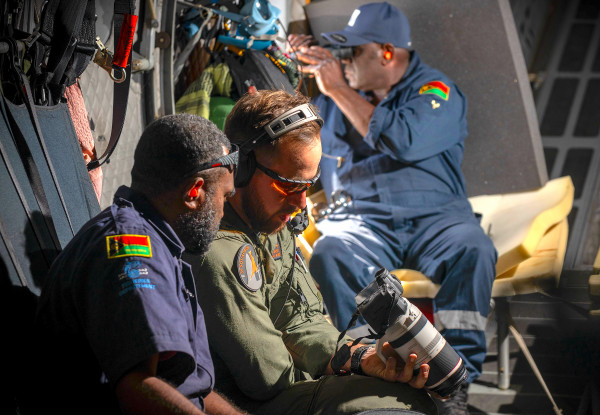
The pilots mark the GPS location of the vessel while the crew at the rear take photos and collect the registration details of the ship.
Another two passes are executed to photograph the vessel from all sides.
Lines being trawled, nets in the water, and light helicopters and RHIB boats used to increase the effectiveness of fishing are evidence of suspected illegal fishing.
The goal is to catch the vessel of interest in the act of operating outside of its licensees or approvals.
At the end of the day, imagery is sent for analysis and further action where required.
RAAF C-27J Spartans from Airbase Amberley usually take part in such operations.
Flight Lieutenant Cannfield has done about a dozen Operation Solania missions.
“It’s one of my favourite kind of missions – I love getting out and seeing the different countries and their people and meeting up with communities we engage with,” he said.
“The locals in Tuvalu were very welcoming and engaging, the kids are fantastic.
“I enjoy bringing our pilots out to countries like Tuvalu, show them the left and right of arc, introduce them to a new world and teach them how to do the job.
“It’s one of the fun parts of my role.”