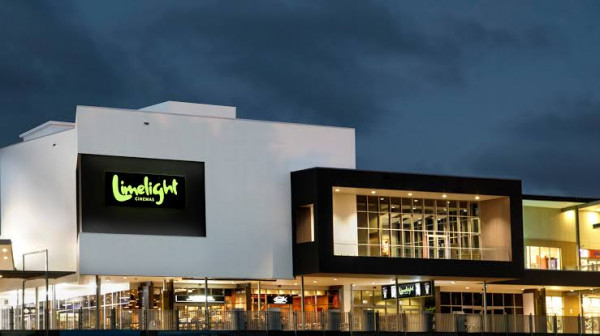
RIVERLINK’S Limelight Cinema owner fears the venue will no longer be viable with a ratepayer subsidised cinema operator in the Nicholas Street Precinct.
Limelight CEO Ross Entwistle spoke out this week against the unlevel playing field Ipswich City Council was setting up with their preferred tenant at the council-owned Venue Building, believed to be Chinese-owned Hoyts.
Mr Entwistle said the cinema had struggled to survive through Covid, trends in streaming services and Hollywood’s reduced output for cinemas but the council’s determination to bring an operator to an expanded city cinema could be the final nail in the coffin.
“There is no doubt that if this deal goes ahead, both Limelight and Hoyts will be unprofitable and are unlikely to remain open for the medium to long term,” Mr Entwistle said.
“The cinema sector in 2020 with first year of COVID was down 70 percent. The second year of COVID was down 50 percent. The market is still trading down at 35 to 40 percent off this year.
“The expectation is that that cinema would take a third to a half of our business.
“Without fear mongering it makes you unviable.
“Our margins are not significant enough to sustain a decline of further 30 to 50 percent. It just doesn’t work and there is demonstrably no need for it.”
He said while the cinema sector was facing its worst downturn, the council appeared to lack understanding or empathy for the business environment surrounding the redevelopment project.
“As an independent, Australian-owned cinema operator, Limelight has operated in Ipswich for over eight years, has employed over 250 Ipswich locals and paid in excess of $9 million in wages to local employees,” Mr Entwistle said.
“Our Cinemas, our restaurant (Ruby Chews), and the other restaurants that surround us in Ipswich, are a community of small businesses, who have faced unprecedented financial, operational, and mental challenges in the last two years. Survival continues to be a day to day proposition for many of us, and I cannot over-state the impact Council’s plan, and its lopsided competitive playing field, would likely have on each of us, should it be allowed to proceed.”
Mr Entwistle said Birch Carroll and Coyle’s decision to close the Ipswich CBD cinema in May 2019 was “normal capitalist dynamics playing out”, however the council was distorting the market with ratepayer subsidised incentives for the cinema it owned in the CBD.
“If it was a commercial operator that said, we’re prepared to invest again in the CBD on the same sort of basis that we believe we would build a better mousetrap that we can make it work that’s fine,” he said.
“That is not what is happening here. This is the council using public funds to distort the operation of a normal market.”
Mr Entwistle said he had questioned the council on how the new city cinema would drive the foot traffic they promised to make the Nicholas Street Precinct stack up but his concerns were ignored.
“The average Australian, pre-pandemic, goes to the movies 3.6 times per annum and in the city of Ipswich they were already going well in excess of that,” he said.
“They had more screens per capita than most population centres in Australia before. Now we’re getting a new lot, even more again, an oversaturation of screens.
“With no upside potential for attendance the only outcome is you are just robbing Peter to pay Paul. Is that really appropriate that a council decides to kill a private business in order to put another one into the CBD? It just seems to me to defy any sense of fair play or logic.”
Mr Entwistle said there was a need to revitalise the CBD but building a shopping centre duplicating the offerings at Riverlink across the river was not the answer.
“I don’t think anyone argues that the CBD really does need, and everyone wants it, to be reinvigorated and re enlivened and repopulated. The question becomes, is building essentially a replica of what is across the river the appropriate way to do that or are there more inventive ways for that to take place?”
Limelight put in a submission to use the existing six screens in the CBD with an offering with a point of difference featuring arthouse cinema, foreign language films and more culturally sensitive movies along with small scale live performance and art displays and a strong food and beverage focus.
“We had support from local arts groups. From a capital cost point of view it would be a lower cost alternative to all the major works required to not only redo those cinemas but build two new ones,” Mr Entwistle said.
“We’ve been made aware of who the preferred tenant is and broadly speaking an understanding of some of the key components of the commercial deal where there is no fixed rent, certainly not for the first three years, and there is a very substantial capital contribution which means the operator they are seeking to attract there is largely de-risked. Meanwhile there is an Australian independent sitting across the river that doesn’t have the benefit of that public subsidy, nor does it have the benefit of not having to worry about rent, all courtesy of the ratepayer.”