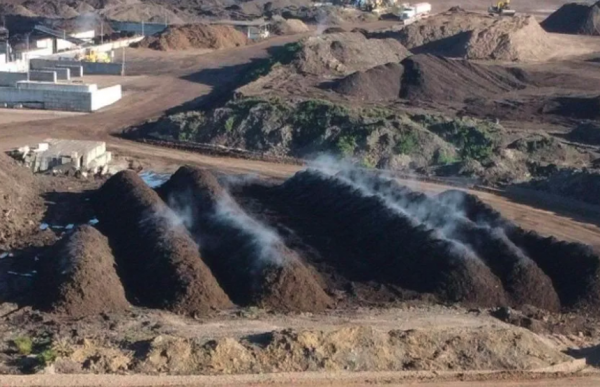
SWANBANK composter NuGrow says it will have in-vessel composting tunnels operational two years earlier than originally scheduled.
The news comes after NuGrow filed an application with the Environment and Planning Court on April 23 to amend a restraint order.
The amendments mean it will now operate a permanent in-vessel system (comprising of purpose-built tunnels) for composting by September 18, 2026, instead of September 18, 2028.
“Accelerating the timeframes for NuGrow to construct an in-vessel system to mitigate odour impacts by up to two years is good news for the community,” a Department of Environment and Tourism, Science and Innovation (DETSI) spokesman said.
The news comes after DETSI filed an application to the Environment and Planning Court against NuGrow in December 2023, seeking to restrain composting activities at the Swanbank site to stop odour impacts on neighbouring suburbs.
The court dismissed the application in April 2024 but did find that NuGrow was causing odour nuisance to the community, thus paving the way for measures to reduce long-term odour impacts.
In September, a restraint order was issued to demand NuGrow overhaul operations to stop odours impacting locals.
Failure to comply meant penalties would be applied to halt the composter from receiving and processing odorous waste.
In-vessel and enclosure systems are designed to capture and treat odour before release to the environment.
They target nuisance odours in waste receival areas, initial mixing bays, and areas where organic material is undergoing stages of decomposition (typically the first 21 days).
An enclosed system involves constructing a building (or part of a building) where negative pressure is used.
An in-vessel system is one where composting material is covered or contained and is composted in a way to capture, filter or otherwise control the release of gases.