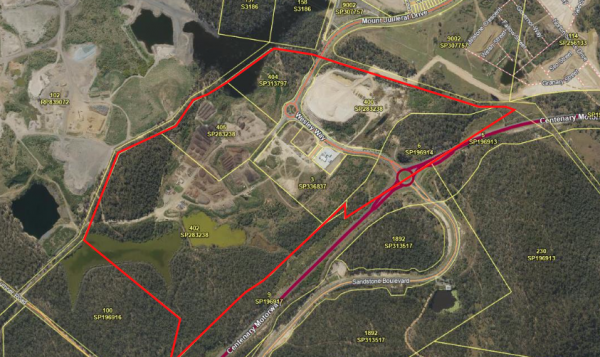
IPSWICH residents are speaking out over Wood Mulching Industries’ (WMI) proposed expansion at Swanbank which has been lodged with Ipswich City Council (ICC).
Locals argue the company’s promises fail to align with its environmental obligations.
Community group Ipswich Residents Against Toxic Environment (IRATE) has lodged formal objections with Ipswich City Council, urging that no further approvals be granted until WMI demonstrated compliance with its existing conditions.
WMI’s latest application promotes a “state-of-the-art” enclosed biogas and composting facility it claims will reduce odour, generate renewable energy, and improve air quality.
Residents, however, remain sceptical, saying similar commitments have appeared in past approvals without being delivered.
“The current environmental authority already required odorous composting to be enclosed, but it simply hasn’t happened,” IRATE said.
WMI’s operations are governed by Environmental Authority, issued in December 2024 under the Environmental Protection Act. That permit allows large-scale composting and mulching but comes with strict conditions across odour, water, land and noise management.
From February 28, 2025, an Odour Management Plan was to identify all odour sources and mitigation measures. Compost windrows are capped at 3.5 metres high, must be covered with a layer of green waste or finished compost to suppress smells, and require adequate spacing for turning and aeration.
A weather station recording rainfall, wind and temperature must also be installed to track conditions against odour events. Stormwater must be contained on site and tested before release, while PFAS-contaminated water is subject to strict limits on use and must be treated before reuse.
Leachate must be captured in enclosed systems, with impervious pads required under all feedstock and composting areas to prevent soil or groundwater contamination.
Importantly, the EA states: “From September 30, 2026, odorous feedstock and feedstocks assessed as having an odour rating of “high” or “very high” in accordance with condition G15(a) must not be received for organic material processing.
This EA condition conflicts with the information supplied by DETSI to Ipswich residents which states: “From September 20, 2026 [note date discrepancy], WMI must be fully enclosed or cease to receive odorous waste.”
IRATE argues that WMI’s request for a four-year extension is incompatible with that requirement.
“This states that by 2026 odorous processing must cease altogether whereas DETSI is telling us that it ‘must be fully enclosed or otherwise cease acceptance’ – this application looks like an attempt to avoid that deadline,” the group said.